Rolling Stone Book of the Year

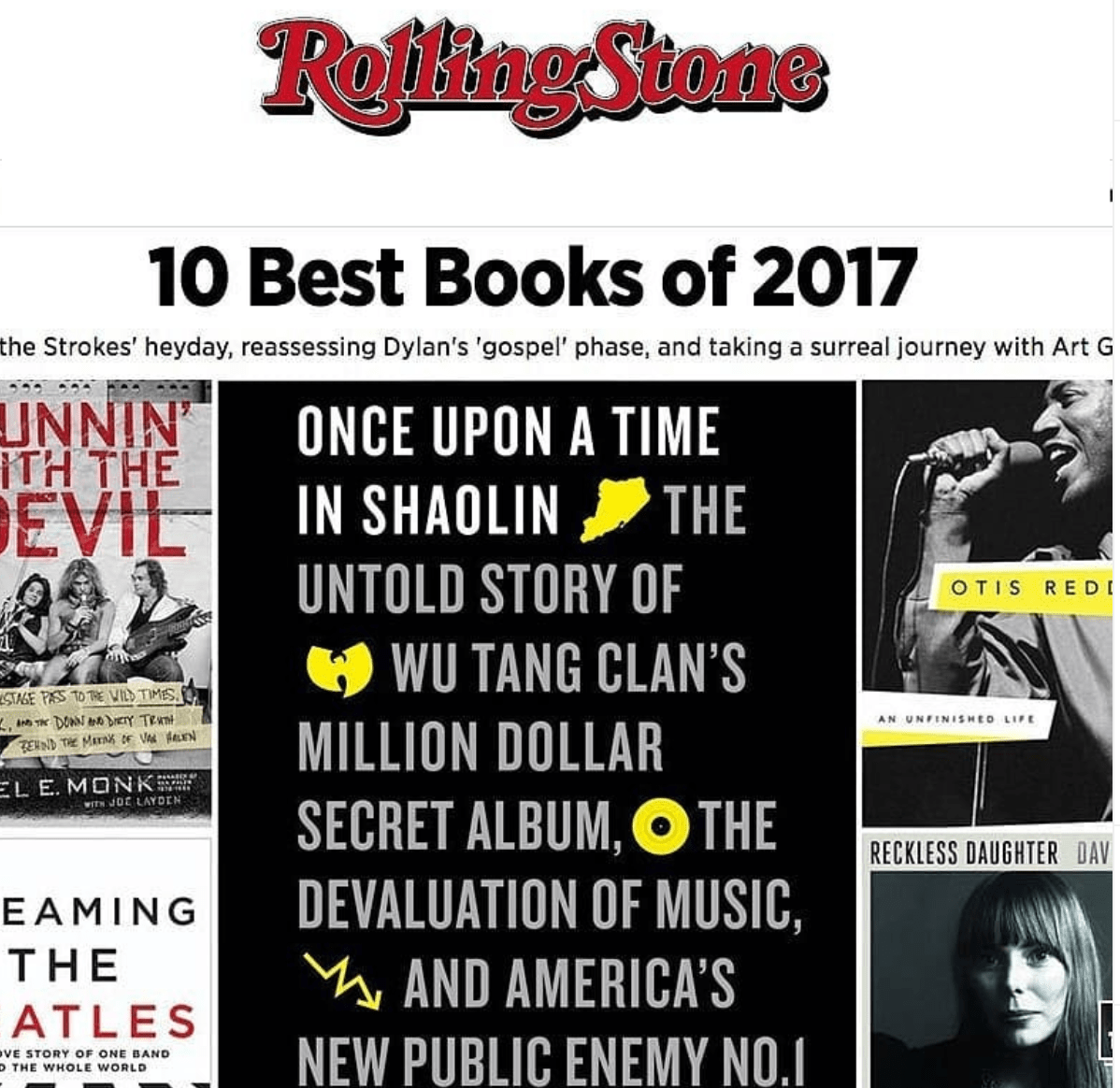
Just turned up as one of Rolling Stone’s music books of the year.

Totally blown away by this at the end of a very volatile year and just wanted to say a massive thank you to everyone who’s supported me, had my back, encouraged me, and given me confidence over the last few months.

It’s been one hell of a ride and the community of mates I’ve had along it have made this fat old bastard proper emotional and very, very grateful.

Strategy and Business Magazine Book of the Year

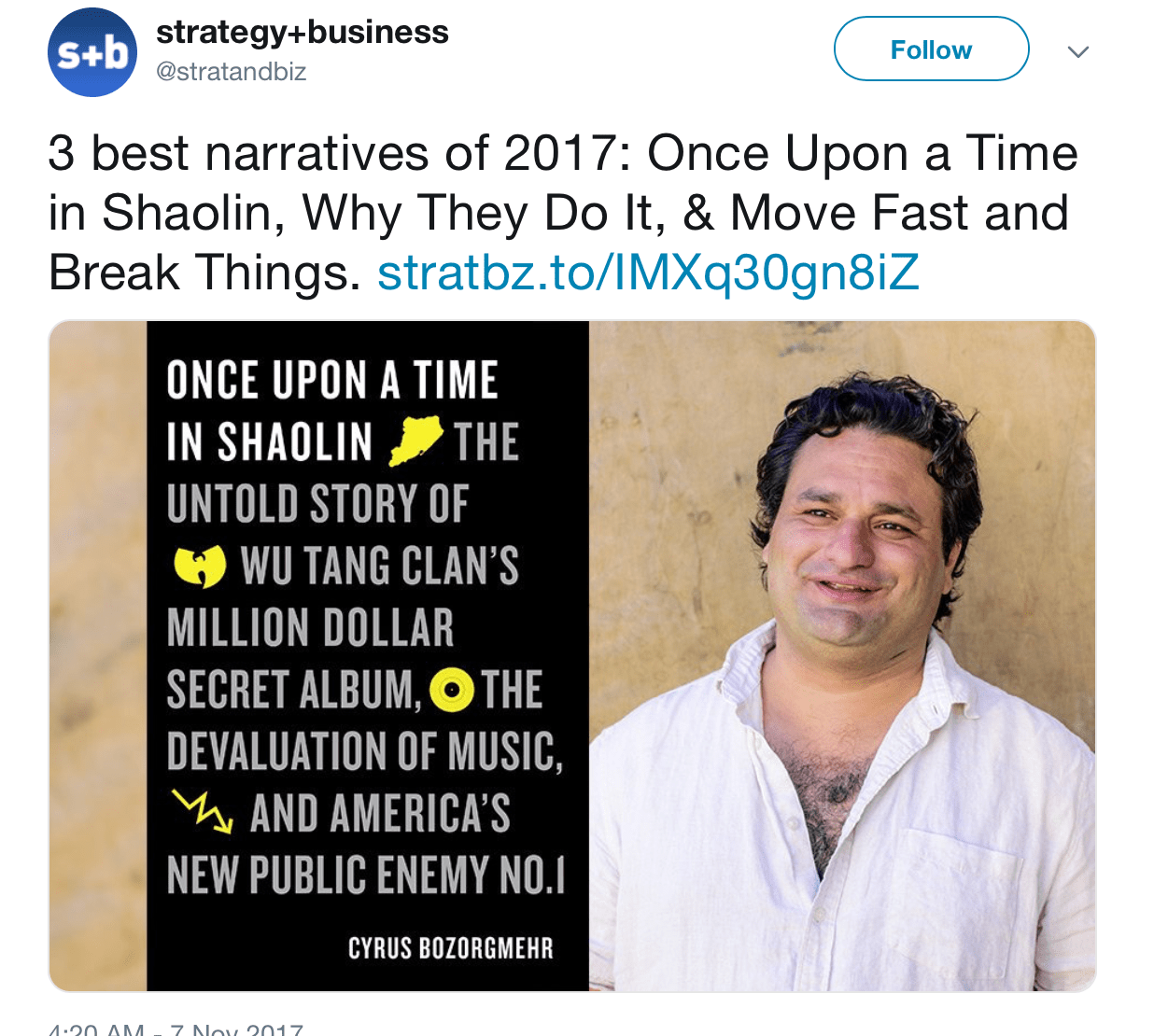
Not gonna lie – this made my day.

Gave a 3 hour Oscar style acceptance speech to the cat this morning before throwing a pair of Y fronts at myself and reluctantly accepting the Order of the Cheeky Pint at lunchtime.

In all seriousness though – brilliant to see the book and the story it tells singled out on such a serious business platform. And by the writer behind ‘The Smartest Guys in the Room’ – the classic book and documentary about the Enron scandal.

Particularly chuffed that not only was some of my corporate analysis taken on board, it’s actually quoted here – which, considering the publication and it’s readership, feels like a real achievement.

Absolute respect for being so open minded – huge thanks to writer Bethany McLean and to strategy+business magazine – it’s a great article that’s well worth a read on the other books..

ARTICLE HERE

Parenting Triumphs

Covered myself in glory yet again. After a complex morning negotiating the Kafkaesque architecture of the state and its automated phone minions, I headed out to a disconcertingly civilised lunch.

Washing the cares away with several bottles of a questionable local vintage, things got flamenco really fucking quickly. By the time my daughter had arrived from school, I was wearing an improvised belly dancing outfit held together by gaffer tape and denial, introducing the neighbours to Rick Astley and generally smashing the shit out of the afternoon.

Having clocked that Zara (my daughter) seemed a touch underwhelmed by her father’s magnetic charisma, I downed three sambucca shots and set out for the building’s swimming pool, strapping a small, tinsel dressed Christmas tree to my head and belting out ‘Oh Come All Ye Faithful’.

Despite my conviction that she’d beam with pride as her friends queued up for autographs, it turned out that I’d misjudged the tone of the swimming pool. Met with a wall of confused stares and a daughter mouthing ‘Fuck Off’ from behind her hands, there was only one thing for it….. Double down hard with a frisky Irish jig.

Now I don’t know if Guinness has some sort of stabilising enzyme in it, but sambucca and dodgy plonk definitely do not. About 7 seconds into the jig, I went for a bit of cultural fusion with some freeform ballet leaps, and while they were undeniably graceful as fuck, the timing may have been a fraction off.

Long story short, I ended up in the swimming pool, fronted it out with a half drowned rendition of ‘The Boys are Back in Town’, pretended it had all been part of the plan and then exited stage left by taking multiple bows to a group of deeply sceptical children.

It wasn’t until about ten minutes later that I realised the Christmas tree was AWOL, and while heading out sheepishly to retrieve it, I discovered that it had been adopted by a 3 year old called Taha – who had – no word of a lie – named the Christmas tree ‘Silly Fat Santa’

I think my work here is done.

Is Irony Eating Itself

Quick thought – is irony eating itself? We hear so much about the ironic nature of hipsterism – a kind of post modernist ennui that deflects genuine feeling into wry skepticism.

There’s an argument to be made that this reliance on irony reflects hopelessness – a sense that there’s no point being passionately earnest about anything because it can only disappoint, so fuck it, let’s just try and find the humour in it or be contrarian in a different way.

But looking at Trumpism and the movement building around the ludicrous Jacob Rees Mogg, you can’t help wondering how much of their support is driven by irony. Rees Mogg in particular consciously trades in caricature and his supporters seem to love the idea of electing an anachronistic joke to high office.

The same with Trump – how many people who were abjectly disillusioned by the political process thought it would be hilarious to send the Donald clodhopping across the manicured lawns of Washington?

Perhaps most extraordinary is that as irony starts to inform things like political choices, it’s losing its bite, normalizing and setting up car crash after car crash on issues that really matter.

It’s almost as if life has been so comfortable in so many ways in the West over recent decades that we’ve forgotten what real catastrophe looks like, so why not treat politics as a good laugh – what’s the worst that can happen?

The thing about irony is that it’s supposed to highlight the absurd as a tool of critical analysis. Now it seems to either be a weird manifestation of apathy or a key current in recasting Western public consciousness as a massive reality TV show.

The US Empire – Conspiracy or Cock Up?

We hear an awful lot of conspiracy drenched ideas about how some shadowy elite or other is plotting world domination. But while it’s not quite as box office, the current state of international politics is so utterly beset by incompetence that you have to wonder how we made it this far as a species.

There’s no doubt that systems, especially economic systems are extremely sophisticated social structures. But they largely run themselves, incentivized by reward, dehumanized by abstraction, galvanized by procedure, and far from dependent on individual judgment.

How did we get to a point where a contemporary empire could be so dazzlingly inept? The greatest triumph of US foreign policy was the rebuilding of Europe into a stable, liberal partner through initiatives like the Marshall Plan. It took real vision to understand that the only way to tame German militarism was to substitute it with economic strength. Same with Japan. America’s bitterest enemies in World War 2 were converted into strong allies.

But almost every other strategic decision has displayed a stunning propensity for self harm. the Vietnam War, the Iraq War, the Bay of Pigs, the endless meddling in banana republics, arming groups that end up enemies – honestly, if this was a business, the shareholders would have stripped out the boardroom fittings by now.

Take North Korea and Iran. Everything North Korea says is underpinned by defense. They’re shit scared by the amount of US military bases on their doorstep, the Americans invaded them in living memory and they have all the paranoia of isolationism, so sabre rattling by America seems like an existential threat. How do you diffuse the crisis? By making them feel safe and recognising outreach as strength rather than weakness. The more the Americans up the stakes, the less the Koreans have to lose. They already feel they’re in a fight for their lives – endlessly confirming that just draws us closer to nuclear war.

Same with Iran. If the US had just beamed in cultural and economic rather than military imperialism, this theocracy would probably be gone by now. Every time a young, educated population looked like asserting themselves, the Americans would make a threat and everyone would reunify behind the national government.

The problem with propaganda is that too many in power have gotten high on their own supply. Thinking you’re in a B-list Hollywood film isn’t helping with the decision making process, and the more obvious this one dimensional view of the world becomes – where threats are Plan A, B, C and D, the more you have to ask…

Nuclear weapons have only existed for 70 years and we’ve still nearly killed ourselves. How much longer will our luck hold out if the people in charge of them don’t grow some strategic sense even if a pacifist ideal is way too much to hope for?